

Finding Belonging by Understanding Who You Are | EO Talks
Growing up between two cultures, Kim spent years trying to fit in and become the person he thought others wanted him to be. In this talk, he shares how reconnecting with his Malaysian heritage, his family, and himself changed the way he understood identity, relationships, and belonging.

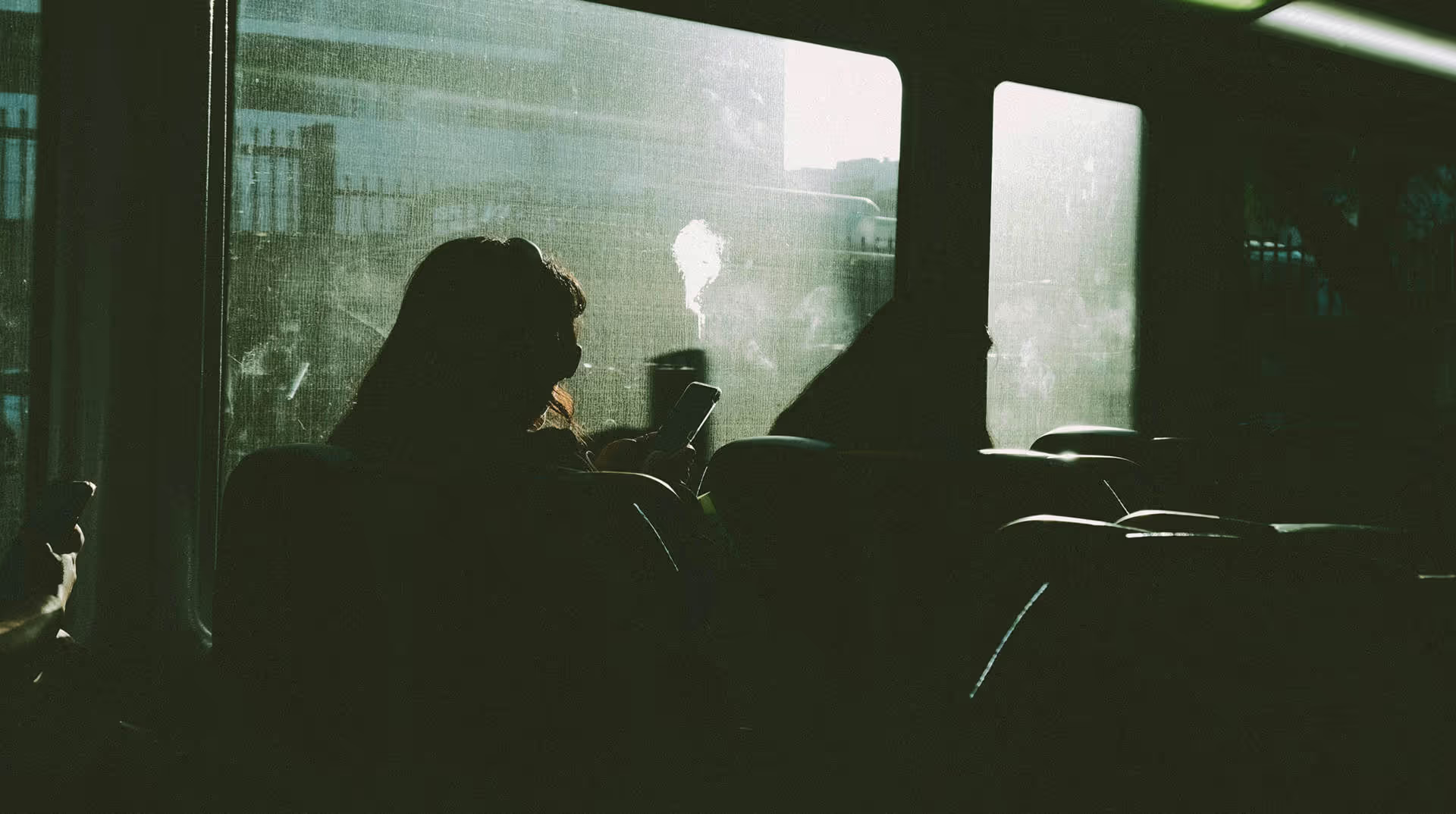
What does it actually mean to belong?
For much of his life, Kim tried to answer that by looking at the people around him. Growing up in New Zealand after moving from Malaysia, he spent years trying to fit in, often at the expense of understanding who he was.
In this talk, Kim shares that experience, how it followed him into adulthood and business, and what eventually helped him find a stronger sense of identity.
Transcript:
"Think of a time when you felt like the biggest outsider in the world.
In 1988, my parents moved from Malaysia to Pukekohe. I was six years old. After a couple of weeks, I was due to start my first day at school.
I still remember my mum leading me by the hand. Obviously, we were running late for an assembly, because when we walked in, there were 300 kids already seated on the ground. Their parents behind them in little wooden classroom chairs.
And someone up on stage talking, maybe the principal. I couldn't understand the language. I couldn't understand what he was saying.
So my brother and I, we played around at the back. And then suddenly, my mum says, 「Kim sen, ki? Fai fai ki?」 And I pop up, wondering what's going on. And 300 kids suddenly turn around to stare at me.
I remember thinking, it's a whole lot of funny looking kids.
Tonight, I'm going to tell you the story of how a plucky young child from Malaysia navigated that sea of white and brown faces. At only the small cost of his identity over the arc of 20 years.
I'm not up here because I figured that out. But I've learned something about how we can get in our own way between the thing that we want and actually having it.
When my parents moved here from Malaysia, they were eager to start rebuilding their lives.
I love my parents. I can't imagine doing what they did. Coming here, knowing no one, barely speaking the language, two kids. But they worked all the time. So it was down to me to figure out how to survive in this brave new world.
I remember making lunches for my brother every morning. I'd lay out six pieces of bread and I'd spread jam down one side and I'd close it and give three to my brother and three to myself. On some days, I'd manage to scab 80 cents for a Big Ben sausage roll. Those were bloody good days.
There was no one to really show me what to do when I was growing up. I didn't really have any role models. So what does a kid do? I made a choice.
I wanted to be like everyone else around me. I wanted that more than anything.
So every day, I'm asking my friends. For years, I'm pestering them with questions. What do you have for dinner? What is this thing called? Pocket money. How often do you change your underpants?
I remember one time my mum saying to me, hey, why don't you take the leftovers to school the next day or some rice, some fried luncheon meat? I could only shrink away in horror.
Mum, don't you know how hard I've worked to build this image? Because it was working. My assimilation was working.
I had mates growing up. I had friends. But no one that really got me. And there was a lot of confusion and resentment that I didn't really understand as a child.
After six years, my parents saved up enough money for us to go back to Malaysia for Chinese New Year. And all I am thinking is, oh my god, it's going to be so good to be home. Or I can just be myself.
And I remember standing in line at the hawker store. And the old man there, he says to me, where are you from? Where are you from? I'm from here. I can hear your accent. Look at your clothes. You're not from around here. And that really got me spinning.
Because where the hell was I meant to be from? Who was I? But that followed me a long way past school. And it's probably no coincidence that I didn't have a serious relationship until my mid-thirties. It's hard to let someone in when you're not sure who they'll be getting.
I took a lot of these patterns of behaviour into my adulthood, my entrepreneurship, and in my business. It was easy for me to see what I thought people might want and try to be that for them. For my team, for my clients, for my family.
Like a comfortable jacket that you can just slip on. For my team, confidence. For my clients, leadership. For my family, calm.
But the more and more I got into these roles, the harder it was to connect with me.
Entrepreneurship self-selects fraud bores. No offence. So I wouldn't be surprised if some of you in this room knew exactly what I was talking about. Maybe that's a part of why you're here.
To connect with someone where you can put down the facade. Put away the act. It's certainly a big part of why I'm here.
But I was still that six-year-old boy. I still had that confusion, that anger inside of me. And it was getting hard to manage.
But thankfully, something would happen close to home that just gave me a clue on how I might break that cycle. I was lucky enough to live with my best friend, Leonard Andrews, for many years. His iwi is Ngāti Kāhununu. And he is deeply connected to and proud of his Māori heritage.
One day, he's telling me about a new guy that started at work. Oh bro, you should have heard his te reo. It was beautiful. His pepeha was like a work of art. And I tell him, hey, I've been meaning to ask you about that for ages. What's the deal with that? Why do you guys introduce yourselves like that?
And Leonard lays it out for me. By telling people his pepeha, they'll know the place and the people that he comes from. And people will listen for his lineage. They'll listen for shared family ties with how they might be connected to him. But I can see something else as he's walking me through it. I can see that he has a deep connection to the people and places that he's talking about.
And despite never having lived there, I knew that he regarded it as home. And upon that foundation, the rest of his identity was built. And I also realised in an instant that I didn't have that.
And I feel this chasm open up in the centre of my chest. You alright bro? And he asks me, I think I've been looking at this completely the wrong way. Had I missed something so fundamental, so maybe so obvious, I needed to find out.
And so I start looking into the history of my people, the Haka people. And I find that they have a long story of migration and survival and rebuilding. And a little piece of myself solidifies.
I push for deeper, more meaningful conversations with my parents. It took me two years to teach them how to hug. And I feel a part of myself settle down.
The next time I go back to Malaysia, I make sure to spend more time there to reconnect with my aunties and my uncles and my cousins. I want to find out about their stories and how they grew up and where they came from. And I find out where I come from.
And lastly, I find someone, a professional, to talk to about growing up between two cultures. And he told me that I'd spent such a long time caring about what others might think of me and trying to be that for them, that I'd lost sight of myself. And unknowingly, over all that time, I had convinced myself that actually my true self wasn't worth showing.
Then he told me something that I still have to this day. He said, your worth is like the clear blue sky. It has always been there and will always be there, no matter what you do or say.
And perhaps it is the only thing worth showing to people. As I manage to pull these disparate pieces of myself together, I start getting more comfortable showing that version of me.
I caught up with a friend not so long ago. She'd been living in London for about 10 years. And I had to ask her, have I changed? She said, no, you haven't changed, but you've definitely become more you.
You know, I think of that boy standing there in front of 300 people, not knowing what they were saying.
I wish I could tell him that he will figure it out. He'll find a way to belong. And that most importantly, he's perfectly okay as he is.
I'm guessing that most of you have a version of that boy in you somewhere. And so here's what I'd leave you with.
Were you playing a part, trying to be liked, rather than just letting yourself be known? And what might happen if just once, just in one conversation, you stopped, took off that jacket, walked around, maybe feel a little bit lighter?
I spent 20 years trying harder. And the harder I put on an act, the harder I was to connect with. What worked was the opposite, getting to know myself so I could show that person.
I spent a long time trying to figure out how to belong.
Turns out I just had to find myself first. And that's how I found you."

Want instant updates when we release new blogs?
Never miss out again - sign up to our newsletter. Get the latest news, resources and marketing tips straight to your inbox. We won’t share your details or spam you. Unsubscribe anytime.